


Flight Pilot: 3D Simulator
Wildlife Studios
I usually know within the first few sessions whether a mobile game has more to offer than a pleasant distraction. Flight Pilot: 3D Simulator made a good first impression because it turns the basic idea of flying into something immediately understandable: take off, control an aircraft, follow the situation in front of you, and try to land without losing control. It is a free role-playing game from Wildlife Studios, although its role-playing label feels lighter than what I would expect from a character-driven adventure or a statistics-heavy progression game.
Instead, the appeal comes from the feeling of learning a physical skill. The first time I approached a landing with too much speed, I had to correct rather than simply tap through a menu. That small demand for attention gives the game more personality than a purely passive arcade experience. It is also why I can see the attraction for someone who wants short sessions with a clear goal, rather than a large world that requires constant reading and planning.
The game has been available since February 23, 2015, and its continued presence is easy to understand. It is approachable, recognizable, and built around a fantasy that works without a complicated explanation. With a 4.1 average from around 2.7 million ratings and over 100 million installs, it has clearly reached a very broad audience. Those figures do not automatically make it a good fit for everyone, but they do reflect how accessible the central idea is.
Why the first week feels more enjoyable than a typical mobile time-filler
My first week with the simulator was driven by a simple loop: start a flight, respond to what is happening, and finish the objective. That structure is effective because it gives every session a beginning and an end. I did not need to reserve a long block of time to feel that I had accomplished something, and I could return later without having to remember a complicated story or a sprawling map.
The controls are where the game either works for you or does not. A player who enjoys adjusting direction and altitude will find a satisfying learning curve, while someone looking for one-touch entertainment may find the aircraft too demanding. I liked that small corrections mattered. Overcorrecting made the flight feel unstable, but being too cautious could also leave me poorly positioned. The result is not a realistic aviation lesson, yet it is more engaging than simply selecting a destination and watching a result appear.
Related News

Why WhatsApp Messenger Still Makes Everyday Communication Feel Easy

Jurassic World: The Game Is the Better Dino Tycoon for Strategic Players

Threads in Real Life: Who Should Join, Lurk, or Leave

How SHEIN Turned Shopping Into an Endless Content Feed

How to Make Fortnite Feel Smarter on Mobile

Should You Switch to Microsoft Outlook on Mobile?
That makes it useful in ordinary situations. I could play a brief mission while waiting for an appointment, then stop without feeling that I had abandoned a long competitive match. The same format suits a quiet evening when I want something interactive but not emotionally intense. It is especially friendly to players who are curious about flying games but do not want to begin with a dense simulation that explains every aircraft system in technical language.
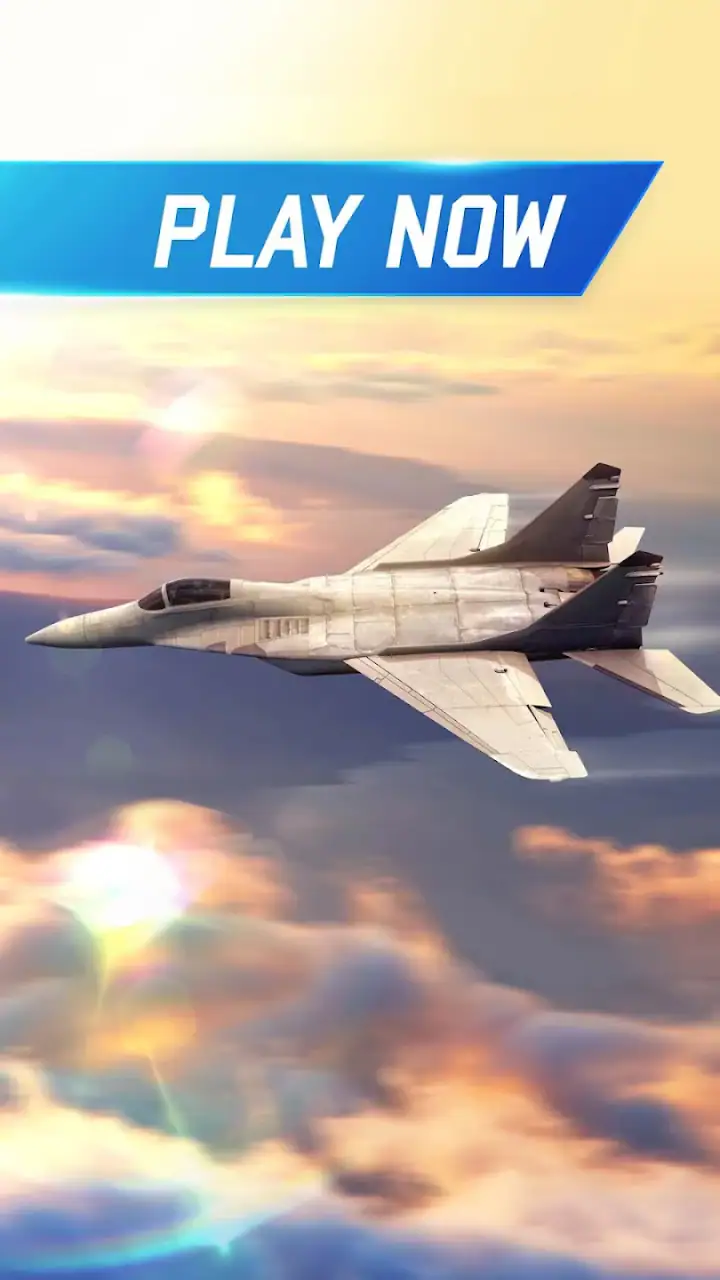
The presentation also helps the first impression. The three-dimensional view gives enough visual context to make orientation meaningful, and seeing the aircraft move through the environment makes mistakes feel connected to my input. I was not merely pressing buttons to fill a progress bar. Even when the task itself was straightforward, the camera and movement gave it a sense of occasion.
Still, I would not describe the opening as a deep role-playing experience. The category may place it beside games built around heroes, equipment, dialogue, and elaborate progression, but this title is primarily about piloting. If you install it expecting a rich character arc or a party-building system, you may wonder why it is classified that way. I would approach it as an accessible flight game with light progression rather than as a conventional role-playing adventure.
Gallery
The small habits that improve early flights
One useful lesson I learned was to avoid treating every correction as an emergency. When I reacted too quickly, I often created a second problem while trying to solve the first. Gentle adjustments worked better than dramatic movements, particularly when I was lining up for a landing. That is a practical tip for new players: watch the aircraft’s direction for a moment before making another change.
I also found it helpful to separate the flight into phases. During takeoff, I focused on gaining control instead of immediately chasing the objective. In the middle of a mission, I tried to maintain a stable path and only then considered the next maneuver. Near the end, I prioritized a safe approach over a fast one. This sounds obvious, but it prevents the common mobile-game habit of rushing toward the next prompt and losing control at the most important moment.
Another worthwhile approach is to use early attempts as practice rather than judging the game by one failed flight. The first few mistakes taught me more about timing than the opening instructions did. That makes the game more rewarding for someone who enjoys gradual improvement, but less appealing to a player who wants instant mastery and a constant stream of effortless wins.
Where the novelty begins to wear thin
The first-week excitement depends heavily on discovering how the aircraft responds. Once that discovery phase passes, the game has to rely on goals, variety, and the satisfaction of cleaner execution. For me, the attraction remained strongest when I had a specific reason to improve a flight. Without that personal target, repeating similar actions could start to feel like maintenance rather than play.
This is the main difference between a good short-session game and a game that becomes a lasting habit. A flight can be enjoyable on its own, but the long-term question is whether each return visit presents a meaningful new challenge. Players who naturally enjoy repetition and skill refinement may keep finding value. Players who need a constant supply of new characters, locations, or story developments may lose interest sooner.
There is also a difference between difficulty that teaches and difficulty that frustrates. When I failed because I approached badly, I wanted another attempt. When a session felt like a narrow exercise in repeating the same correction, the motivation was weaker. The game is at its best when I feel that my control improved; it is less compelling when the task becomes a routine test with little sense of discovery.
What keeps it useful after the first month
After the initial curiosity fades, the game’s value depends on how you use it. I would not install it as my only mobile game. I would keep it as a compact option for moments when I want a focused activity with a clear finish. That role is more realistic than expecting it to replace a large role-playing game, a competitive multiplayer title, or a detailed flight simulator.
Its recurring value comes from the combination of accessibility and control. I can return after a break without relearning an entire narrative or rebuilding a complicated strategy. The basic skill remains familiar, while the challenge comes from executing it more cleanly. That makes it suitable for a player who enjoys personal improvement but does not want a game that demands daily attendance.
The free entry point matters here. Since the game costs nothing to start, I can test whether its handling suits me before deciding whether it deserves regular space on my device. There are in-app purchases ranging from $0.49 to $99.99 per item, so I would recommend treating optional spending carefully. The sensible approach is to play long enough to decide whether the core flying itself is enjoyable. If it is not, buying something will not fix that fundamental mismatch.
I also think the game works best when I set my own boundaries. A short session focused on one or two flights feels purposeful. A much longer session can expose the repetition more quickly, especially if I am playing without a specific goal. This is one of the less obvious trade-offs: the game’s convenience is a strength, but its compact structure means that extending a session does not necessarily create a deeper experience.
For a parent considering it for a younger player, the Everyone content rating makes the game broadly approachable. I would still pay attention to how the child responds to failure and optional purchases, as I would with any free game that offers paid items. The flight controls can be a useful way to practice patience and coordination, but a child expecting constant rewards may become frustrated when a careful approach is required.
How it compares with other choices in the category
Compared with a conventional role-playing game, this is much easier to enter and much lighter on story. There is no need to memorize a cast of characters or understand a large system before the first enjoyable moment. That simplicity is an advantage when I want immediate action, but it also means there is less narrative motivation to bring me back.
Compared with a serious flight simulator, it is the more approachable choice. I can focus on the sensation of steering and completing a flight rather than learning technical procedures. The compromise is depth: players searching for detailed aircraft management, authentic training, or a professional-style cockpit experience should look elsewhere. This game is about the fantasy of piloting in a mobile-friendly form, not about reproducing every part of aviation.
Compared with endless arcade alternatives, it offers a stronger sense of purpose because a flight has structure. I am not simply trying to survive for as long as possible or chase an abstract high score. On the other hand, an endless game may provide more immediate variety for someone who prefers constant speed and spectacle. The better choice depends on whether you enjoy controlled progression or uninterrupted action.
That comparison also explains why the title can attract such a wide audience while still dividing players. Beginners may appreciate the clear premise, while experienced simulator fans may find it too simplified. Neither reaction is unreasonable. The game succeeds when judged as an accessible mobile flying experience, not when forced to compete with the most detailed games in the genre.
The maintenance burden of keeping it installed
One advantage is that the game does not require much mental maintenance. I can leave it alone for a week and return without feeling punished for missing a schedule. That makes it easier to keep as a casual companion than games built around daily tasks, social obligations, or time-sensitive events. For me, that low-pressure quality is an important part of its lasting appeal.
The maintenance burden is instead about managing my own expectations. If I keep expecting the game to transform into a deep role-playing adventure, I will eventually be disappointed. If I treat it as a focused flying game that I can open when I want a few minutes of control-based play, it fits much better. The title earns space through reliability, not through endless novelty.
Device compatibility is also reasonably broad: the current version is 2.12.32 and requires at least Android 7.1. That makes it relevant to people who are not using the newest phone, although real-world smoothness can still vary with hardware and available storage. I would check that my device meets the requirement before downloading, particularly if I am using an older Android handset.
Because it is free, the practical maintenance question is whether it earns its place without becoming a source of unwanted spending. I would disable impulsive purchasing habits, decide on a personal limit, and judge improvements by how they affect the flying itself. The broad price range of optional items means the game can remain inexpensive for one player and become much more costly for another, depending on how often purchases are made.
For someone who wants a game that can be played offline in every situation, I would not make assumptions before testing it in the exact circumstances that matter to them. My recommendation is to try the intended routine—such as commuting, waiting, or playing at home—rather than relying only on a short initial session. A game can feel perfect in a quiet room and less convenient when used in a busy everyday setting.
The sources of fatigue I noticed
The main fatigue comes from repetition. Flying is the central pleasure, but it is also the central limitation. Once the controls become familiar, the experience needs enough variation in objectives or enough personal satisfaction in refinement to stay fresh. I could enjoy repeating a difficult approach, but I would not want every session to feel like the same exercise with a different starting point.
Another source of fatigue is the gap between visual excitement and mechanical depth. The three-dimensional presentation makes the game look more involved than a basic arcade title, yet the underlying activity remains concentrated on piloting. That is not a flaw by itself, but it can create a mismatch for players who expect the visuals to lead to a much broader simulation.
Optional purchases can also affect the feeling of progression. Even when I do not spend, knowing that paid items are available can make me more cautious about investing emotionally in a system I may not want to fund. My advice is simple: decide whether the free experience already gives you enough enjoyment. If it does, keep spending optional rather than treating it as a requirement for long-term satisfaction.
Finally, the game may not suit people who dislike failure during short sessions. A poor approach can make a brief play period feel wasted, especially when I am tired or distracted. In those moments, a slower puzzle game or a forgiving arcade title may be a better choice. Flight Pilot rewards attention, and that is precisely why it is not ideal when I want something completely mindless.
My long-term verdict on Flight Pilot: 3D Simulator
After the novelty fades, I think the game earns a modest but legitimate place in a mobile library. It is not the most complete flight simulation experience, and it does not deliver the depth I associate with a full role-playing game. What it does well is narrower and more useful: it offers approachable, goal-based flying that can fit into short sessions and still reward better control.
I would recommend it to a casual player who likes aircraft, wants a game that can be understood quickly, and enjoys improving through practice. It is also a good fit for someone who wants an alternative to story-heavy games and does not mind repeating a familiar activity. The Everyone rating broadens its audience, while the free starting price makes experimentation easy.
I would skip it if I needed a rich campaign, detailed aviation systems, deep character progression, or constant content changes. I would also look elsewhere if I found repeated landings and corrections boring after the first few sessions. A more serious simulator would be better for technical depth, while a traditional role-playing game would be better for narrative and long-term character investment.
My final recommendation is to judge it by the quality of one ordinary week rather than by its impressive reach. Install it, learn the controls patiently, and see whether you look forward to attempting a cleaner flight after a mistake. If you do, the game can become a dependable short-session habit. If you only enjoy the first visual impression, the repetition will probably expose that quickly.
Its lasting strength is focused accessibility, not endless depth. Wildlife Studios has built a game that makes flying easy to approach while leaving enough control for practice to matter. I would keep it installed for occasional flights, but I would not expect it to become the one game I return to every day. For the right player, that balance is exactly the point: a free, familiar aircraft game that remains enjoyable when used in the right-sized doses.
FAQs for Flight Pilot: 3D Simulator
What devices are compatible with Flight Pilot: 3D Simulator?
Flight Pilot: 3D Simulator is designed for both Android and iOS devices. It runs smoothly on most modern smartphones and tablets. However, for the best experience, it's recommended to use devices with at least 1GB of RAM and updated operating systems. Always check the app store for specific device compatibility.
Is Flight Pilot: 3D Simulator free to play?
Yes, Flight Pilot: 3D Simulator is free to download and play. However, it includes optional in-app purchases that enhance gameplay, such as unlocking new planes or levels. These purchases are not necessary to enjoy the core gameplay but can offer additional features and convenience.
What are the main features of Flight Pilot: 3D Simulator?
Flight Pilot: 3D Simulator offers a variety of features, including realistic 3D graphics, a wide range of aircraft to pilot, and diverse missions that test your flying skills. The game also includes a free flight mode, allowing players to explore the open world at their own pace. Regular updates add new content and improvements.
Does Flight Pilot: 3D Simulator require an internet connection?
Flight Pilot: 3D Simulator can be played offline, making it perfect for travel or areas with limited connectivity. However, some features, such as certain updates or in-app purchases, may require an internet connection. Playing offline does not restrict access to the main features and missions.
How can I improve my skills in Flight Pilot: 3D Simulator?
Improving skills in Flight Pilot: 3D Simulator requires practice and familiarity with the controls. Starting with easier missions helps build confidence. Players can also watch tutorials and read guides online. Experimenting with different aircraft and settings can also enhance understanding of the game mechanics.
Pros
- Realistic graphics enhance gameplay immersion.
- Wide variety of planes to choose from.
- Intuitive controls for easy navigation.
- Challenging missions keep it engaging.
- Offline mode available for play anywhere.
Cons
- In-app purchases can be costly.
- Limited free content without purchases.
- Occasional ads interrupt gameplay.
- Some missions feel repetitive.
- Requires significant device storage.


